Fixing Temperature Instability for Kansas City Battery Manufacturing

Fixing Temperature Instability for Kansas City Battery Manufacturing
When it comes to battery manufacturing, consistency is everything. Each cell relies on a delicate balance of temperature and humidity to cure properly — and even minor fluctuations can mean the difference between a perfect product and one that never leaves the production floor.
That was the situation facing one battery manufacturing plant in Kansas City, Kansas, where temperature instability in their curing furnaces was creating constant production headaches. Their existing burners couldn’t maintain steady heat, leading to downtime, wasted materials, and costly inefficiencies.
The Challenge: Flame-Outs and Unstable Temperatures
Inside this plant’s “cure huts,” rows of lead-acid battery plates undergo a tightly controlled process. Each plate is coated with a soft, clay-like lead paste, then cured under specific conditions of heat and humidity for 24 hours. When temperature control fails, the paste either dries out too quickly or doesn’t crystallize properly, and both outcomes lead to scrap.
The problem was simple to see but tough to solve: the facility’s burners would flame out constantly, and the furnaces couldn’t maintain their target temperatures. Operators could only run the system in a “high-low” mode, full heat or almost none, which caused wild temperature swings and poor product consistency.
Making matters worse, the environment inside the plant was exceptionally harsh. Acid vapors from the manufacturing process corroded the thin sheet-metal burners that had been installed years earlier, shortening their lifespan and degrading performance.
In short, the plant couldn’t rely on its heat, and without reliable heat, it couldn’t rely on its output.
The Diagnosis: Getting to the Root Cause
Our service team began with a full system audit, tracing every issue back to its source. What we found was a combination of environmental wear, poor burner material choice, and inadequate mounting.
Over time,it became clear that the existing burners were not designed to handle the plant’s highly corrosive environment. The equipment’s sheet-metal housings had deteriorated in the acidic air, and their weakened structure led to alignment and ignition issues.
When we stripped back the insulation during inspection, it was evident that the existing burner mounts weren’t even supporting the full weight of the units. We worked directly with the plant’s maintenance staff to fabricate and install a proper structural support system, a fix that not only solved the immediate problem but also ensured safer long-term operation.
The Solution: OvenPak Burners and Modulating Control
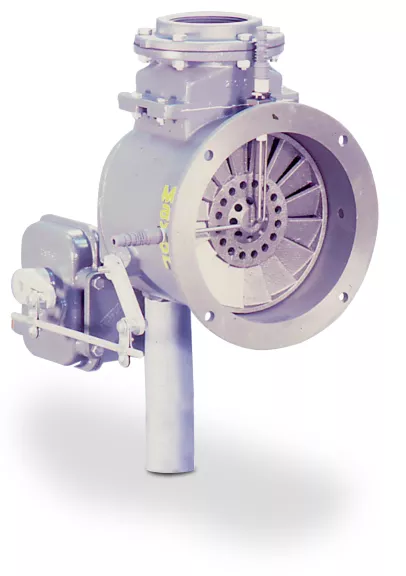
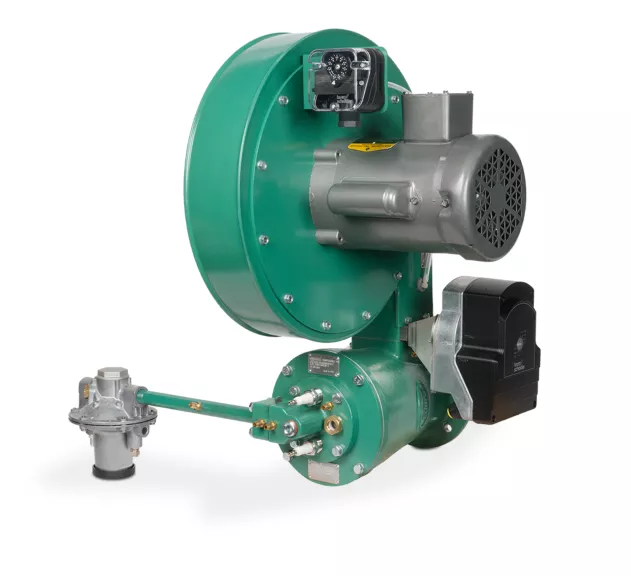
We replaced the degraded burners with Maxon OvenPak cast-iron models, chosen for their rugged construction and proven performance in high-acid environments. These burners were specifically engineered to resist corrosion, providing a reliable flame even in the toughest industrial settings.
To eliminate the “high-low” temperature problem, our engineers installed a modulating control system that allows the burners to adjust their firing rate smoothly and continuously. This eliminated the old on-off cycling pattern that caused temperature overshoot and undershoot — what the plant’s team described as a “sawtooth” pattern on their temperature graphs.
Now, instead of bouncing between extremes, the cure huts maintain stable, consistent temperatures across every production cycle. That precision control has translated directly into better product quality and improved throughput.
Trusted Solutions for Industrial Burners in Kansas City and Beyond
If your facility relies on industrial burners anywhere in the Midwest, our team is ready to help you optimize performance, improve temperature control, and extend the life of your equipment. Let’s keep your operation running strong. Contact us today to schedule a system inspection or optimization consultation.