What Is a Flame Safeguard? A Plain-English Guide for Burner Operators
Add a burner to your operation and you add risk. It brings fuel and air together in a confined space and lights the mix, and when that process goes wrong, the people working nearby are the ones in danger. Keeping them safe is the first job. Keeping the line running comes second. A flame safeguard is the control built to manage that risk.
This article covers basics: what a flame safeguard is, how it works, and how to tell whether your operation needs one.
What Is a Flame Safeguard?
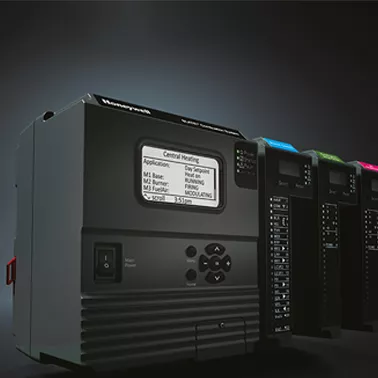
A flame safeguard is an automatic control that keeps a burner operating safely. Its purpose is to watch over combustion and shut the system down the moment something is wrong, without waiting on a person to catch it.
Its core job comes down to a single check. It confirms there is a flame whenever the gas valves are open. If gas is flowing to the burner and the control cannot confirm that gas is burning, it shuts the gas off. That is what prevents an explosion and stops raw, unburned fuel from building up in a chamber.
To do that, the flame safeguard manages the burner from startup through shutdown. It confirms a flame is present. It decides when the gas valves open and close. And it checks that every safety device on the system is in the correct state before it lets anything fire. It works through a fixed sequence, running the same checks in the same order every time.
How a Flame Safeguard Works, Step by Step
Most flame safeguards move through the same basic sequence, even when the brand names and displays differ. Here is what happens between the moment you call for heat and the moment the burner settles into a steady fire.
Step 1: The purge
Before the control will allow a single spark, it runs a purge. Once every safety input is satisfied, it starts a fan-driven cycle long enough for roughly four full air changes to move through the combustion area. If any fuel is lingering from a previous cycle or a small leak, that airflow clears it out before ignition, so a spark finds nothing to catch. It is the combustion equivalent of airing out a room before you strike a match.
Step 2: Ignition
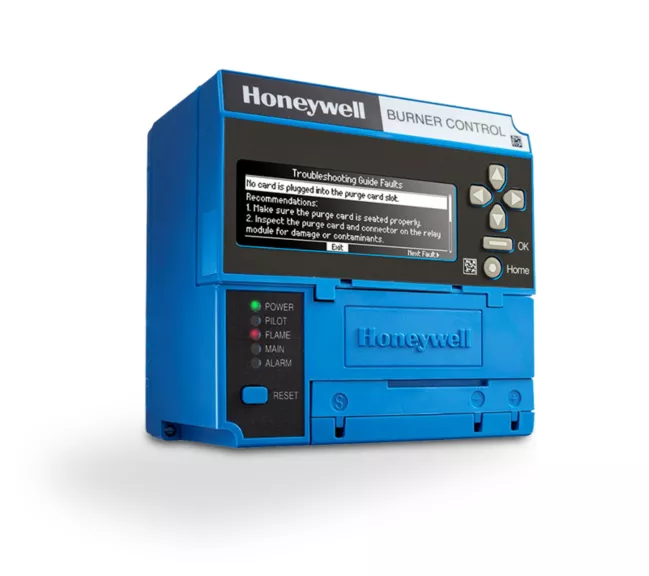
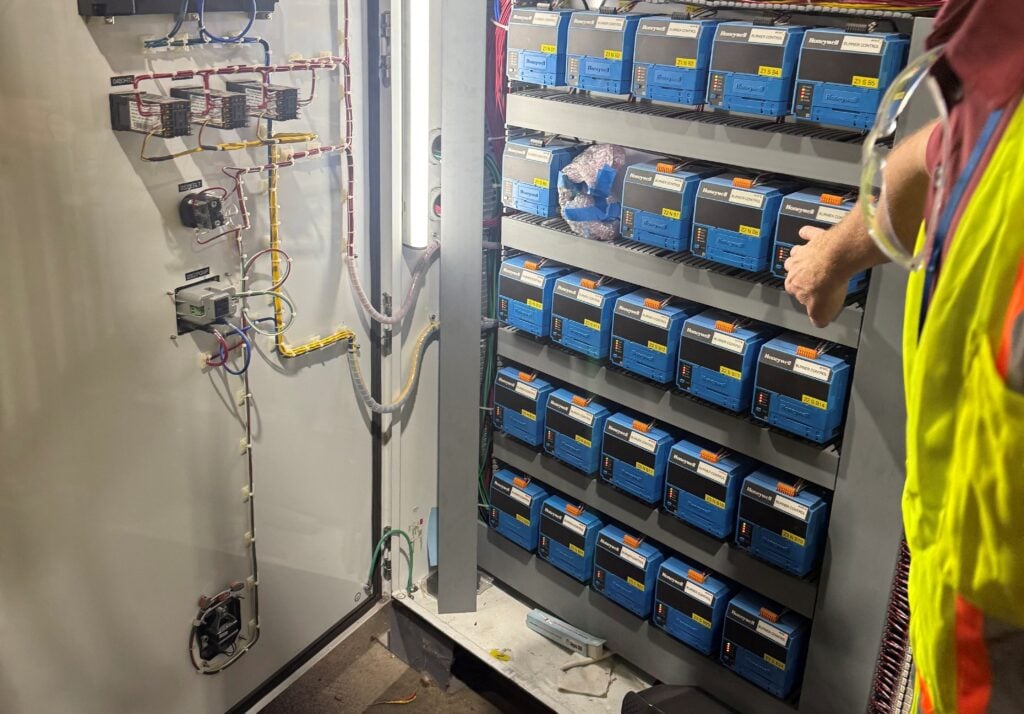
With the chamber purged, the control opens a gas valve and energizes the ignition transformer, a spark source much like the spark plug in a car or lawn mower. Then it watches for proof: a valid flame signal inside a short, set window. On the Honeywell controls we build with most often, some of the most advanced flame safeguards on the market, it searches for a flame signal in the range of five volts. If it is there, the sequence continues. If it is missing or too weak while the valves are open, the control shuts everything down rather than let fuel flow toward a flame it cannot confirm.
Step 3: Run mode and constant watch
A proven flame moves the system into run mode, and the control keeps watching the flame signal for as long as the burner fires. If the flame goes out, it catches the loss and shuts the system down.
It also holds the burn inside a safe range. If the fuel mix runs too rich, the burner can overfire, generating more heat than the system should take on and putting your operation at risk. The flame safeguard works within a set variance limit, and once conditions push past the top of that limit, it shuts the system down.
The control watches more than the flame. It also monitors a chain of safety switches wired in series, which the trade calls the limit string. Everything in that chain has to be intact for the burner to run, and if any one switch opens, the burner shuts down until the condition clears. Those switches cover the conditions that make a burn safe, including low gas pressure, high gas pressure, combustion air pressure, and a high temperature limit.
Lockout and manual reset
Most of these devices are built so a person, rather than the control, clears them. When one trips, someone has to walk over and physically press a reset button. A few manufacturers have safeguards that allow for automatic reset up to three times, but we steer customers toward manual reset for safety reasons. A trip is critical safety information your team needs to know about. Manual reset puts a person in front of the problem so the cause gets found and fixed.
Does Your Burner Need a Flame Safeguard?
If your burner system operates at 140,000 BTU per hour or more, you need a flame safeguard. Most industrial burners run well past that threshold, so this covers the majority of plants.
Safety is why that number matters. A flame safeguard is your primary protection against an explosion and against raw fuel building up where people work. Some older systems, including large multi-burner setups like brick kilns, were built without one to save cost. Those are the systems worth a second look, and if your burner runs without a flame safeguard today, a retrofit is worth serious consideration.
Compliance is another reason you may need one. The guidelines you have likely heard of come from the NFPA, the National Fire Protection Association, and they call for flame safeguards on most fuel-fired equipment. Industrial ovens, for instance, fall under NFPA 86. These standards get revised on roughly a four-year cycle, so a system built to code a decade ago can sit behind current guidance today. The older FM Global standard many plants followed has since merged into NFPA.
Whether you are required to have one or not, a flame safeguard is a good idea. It lowers the odds of an explosion and of someone getting hurt on your floor.
Why Correct Flame Safeguard Installation Matters
A flame safeguard does not come with a wiring diagram for your plant. You can buy the same Honeywell control we sell, but how it gets installed depends on the type of burner you run and how your system is configured. That is why the same control can go into two plants and leave one of them unsafe or out of code.
The limit string is one example. The control has terminals for the safety switches, but nothing forces you to use them. It will not even tell you which switches belong there. Wire it wrong or leave switches out, and the burner can still light and run without the protection those switches provide.
The combustion air pressure switch is another. NFPA guidance calls for a dynamic check on it, proving the switch changes state when the blower cycles on and off, so no one can bypass it with a jumper wire. Some flame safeguards run that check internally. The one we often use does not, so we add a separate circuit to stay compliant. If you did not know the rule existed, you would never build it.
Getting this right takes someone who knows how these systems go together. We build the control panels these safeguards live in and integrate the flame safety so your team stays as safe as possible.
A Quick Look at Flame Safeguard Types and Options
Flame safeguards are not one-size-fits-all. The right setup depends on your burner, your fuel, and how your system is configured. A few of the ways they differ:
- Flame detection method. Ultraviolet, self-check ultraviolet, infrared, and flame rod each suit different burners and environments.
- Ignition method. Direct spark lights the main flame directly, while a proved pilot uses a small pilot flame to light the main burner.
- Brand and model. Honeywell, Siemens, and Kromschroder each offer their own lineups, with different displays, features, and price points.
- Advanced setups. Larger plants sometimes build flame safety into a safety-rated PLC to pull richer data back to a control room.
Which one fits your burner is its own decision. Our Flame Safeguard Buyer’s Guide walks through how to choose.
When to Bring in a Combustion Expert
Most plants stopped keeping a full-time combustion specialist years ago. Today’s leaner maintenance teams cover everything from electrical to air handling, and the burner is just one system among many. If your team is set up the same way, you aren’t alone. Bringing in a specialist to set up your combustion system is the surest way to keep it up to par with the latest safety standards.
Combustion is all we do at BDC, and it has been for 80 years. We build the UL 508A control panels these systems run on and integrate the flame safety to NFPA 85 and 86. Our combustion experts are just one call away. Whether you are scoping a new system or fighting a control that keeps locking out, reach out to our team. If your burner is down right now, call us and we will get moving.