Spray Dryers for Food, Chemical, and Pharmaceutical Manufacturing
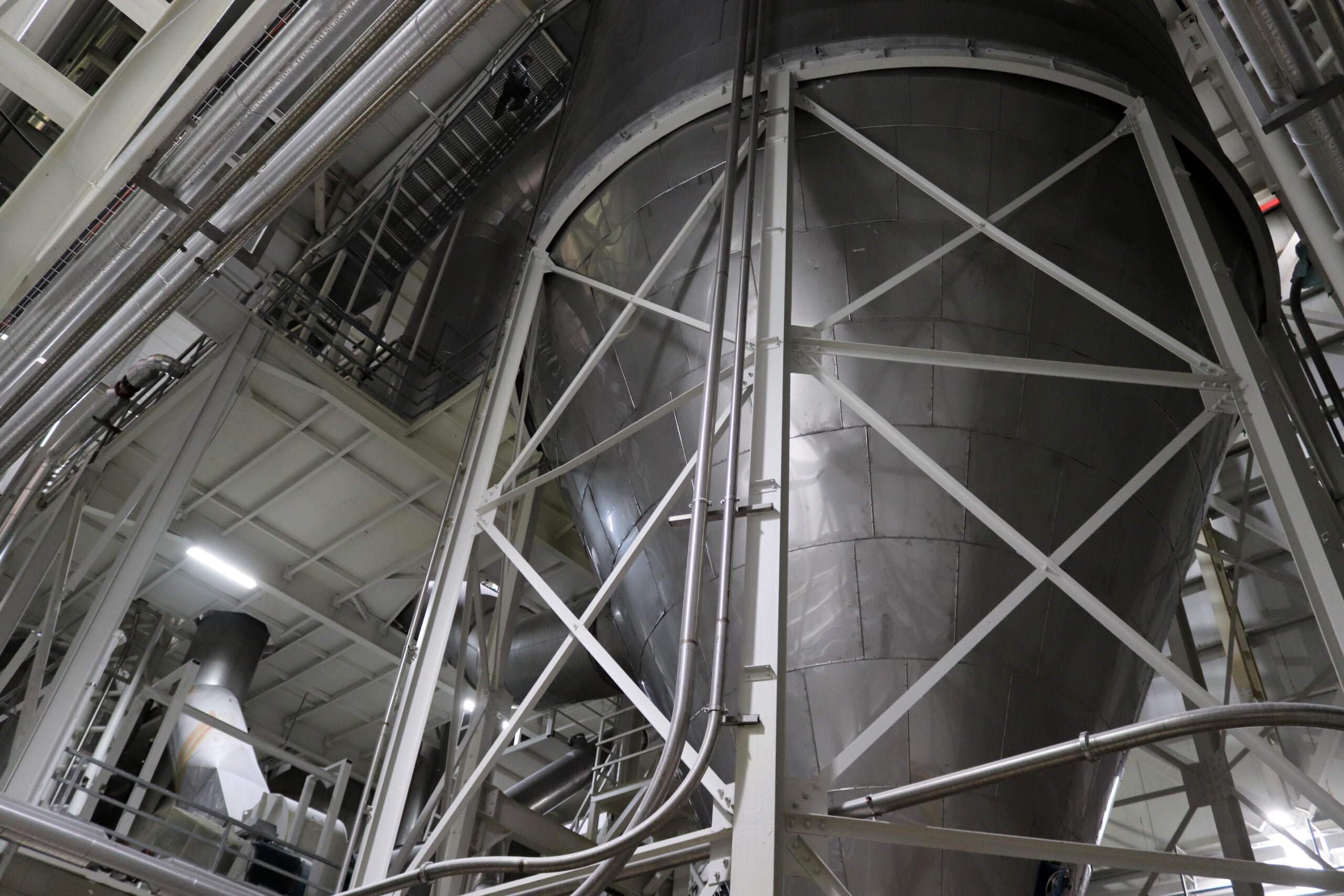
Spray dryers run in some of the most demanding production environments in food processing, pharmaceutical manufacturing, and chemical production. These are grimy, powder-filled environments, and the product tolerances are tight. A spray dryer converting liquid milk into powder, or processing a pharmaceutical active ingredient into a stable dry form, has almost no margin for temperature inconsistency.
The burner sits at the center of all of it. Having reliable combustion is critical for ensuring a high quality product and maximizing your annual throughput.
This guide covers how spray dryers work, the difference between direct and indirect fire configurations, what goes wrong and why, and what separates a combustion specialist from the general service companies that typically handle these calls.
What is a Spray Dryer?
A spray dryer takes a liquid and turns it into a dry powder. Liquid feed enters the top of the dryer and gets atomized through a nozzle into very fine droplets. Hot air is introduced into the large cylindrical chamber at the same time. As the droplets fall through the heated air, the moisture evaporates rapidly, and by the time the material reaches the bottom of the chamber, it has become dry powder. A pneumatic system moves that powder out of the dryer and into the next stage of the process.
The physical design of the dryer reflects one central engineering goal: time at temperature. Manufacturers need a droplet to remain in the heated chamber for a specific number of seconds to reach the right moisture level and particle consistency. The height of the dryer controls how long that takes, with gravity and air velocity together determining drop time. These towers are often four, five, or six stories tall.
That relationship between air temperature and airflow, and the residence time they create, is also what makes burner performance so consequential. Small changes in how the burner fires directly impact the entire drying environment.
Direct Fire vs. Indirect Fire: What Is the Difference?
Spray dryers operate on one of two combustion configurations: direct fire or indirect fire. The difference between them runs through every aspect of how the system is designed, operated, and maintained.
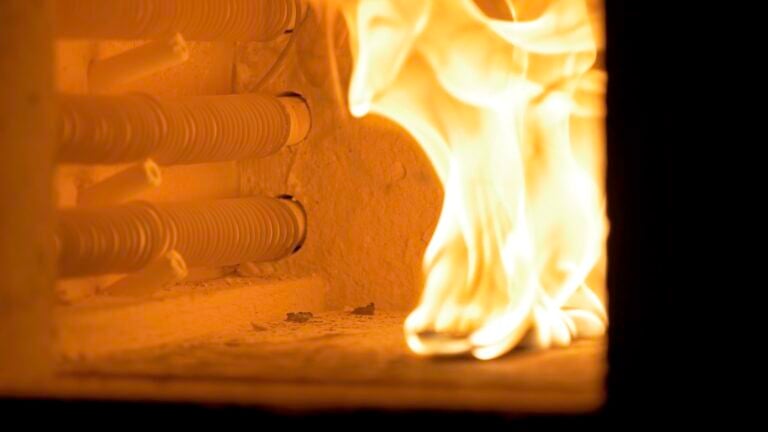
Direct-fired spray dryers position the burner so that it’s firing directly into the dryer chamber with the product.
- Heat transfer is 100% efficient with no intermediate step between the burner and the product
- Lower equipment cost and smaller equipment footprint
- More maintenance-intensive and more prone to product quality issues, requires regular cleaning to remove powder build up on the burners.
- Risk of scorching the product if flame length extends too far into the chamber
- Best for chemical processing, fertilizer production, and industrial applications where combustion byproducts do not affect the end product
Indirect-fired spray dryers separate the combustion from the product stream. In a basic configuration, the burner fires into a duct and the resulting hot air is routed into the dryer chamber. A more complete separation uses a heat exchanger, where combustion products never enter the process air at all.
- Combustion byproducts including NOx stay entirely out of the product stream
- Prevents yellowing in white-colored powders such as egg powder and whey protein
- Eliminates the risk of direct flame contact and scorching
- Requires more equipment than direct fire, including a larger burner
- Required for food, pharmaceutical, and any application where product purity or color cannot be compromised
Direct vs. Indirect Fire at a Glance
| Direct Fire | Indirect Fire | |
| Combustion contacts product | Yes | No |
| Thermal efficiency | High (100%) | Lower |
| Equipment cost | Lower | Higher |
| Maintenance intensity | Higher | Lower |
| Scorching risk | Yes | No |
| NOx / discoloration risk | Yes | No |
| Typical applications | Chemical, fertilizer, industrial | Food, pharmaceutical, white-colored powders |
Common Spray Dryer Problems and What Causes Them
Spray dryer problems tend to get attributed to the burner. However, the diagnosis is usually more involved.
Why Does My Spray Dryer Have Hot Spots and Cold Spots?
Problem: Product moving through the dryer chamber receives uneven heat exposure, leading to inconsistent drying across a run.
Cause: Clogged burner ports create uneven flame distribution, with one side of the burner carrying a full flame while the other produces almost none. Filter buildup and wall accumulation compound the problem by changing airflow patterns inside the chamber.
Fix: Cleaning and retuning the burner. This is a maintenance issue in most cases and usually doesn’t require a burner replacement.
Why Is My Spray Dryer Scorching the Product?
Problem: Product comes out darker than spec or shows visible burn marks.
Cause: Flame length is extending too far into the dryer chamber and contacting the product directly. The instinct is to reduce temperature, but there are other variables that you should try adjusting first.
Fix: Tune the burner to shorten the flame or adjust airflow to shift its position. These will likely resolve scorching without changing the temperature setpoint.
Why Is My Spray Dryer Powder Turning Yellow?
Problem: White or light-colored powder is turning yellow while in the dryer.
Cause: NOx from combustion is reaching the product stream. This happens when a direct fire setup is used for a product that requires clean combustion air, or when an indirect setup is producing more NOx than expected.
Fix: Switching to indirect fire, moving to a low-emission burner configuration, or tuning the burner to correct an improper fuel-air ratio generating excess NOx.
Why Is My Spray Dryer Producing Inconsistent Powder?
Problem: Powder varies in moisture, particle size, or consistency across a run.
Cause: Wall buildup reduces the effective chamber volume and disrupts airflow patterns. Filter accumulation has the same effect. Both can shift the drying environment and yield inconsistent results.
Fix: A structured preventive maintenance program to keep the chamber clear before buildup affects product quality.
What Type of Burner Is Used in a Spray Dryer?
Spray dryers use different burner configurations depending on the application, fire type, and local emission requirements. Three types cover the majority of installations.
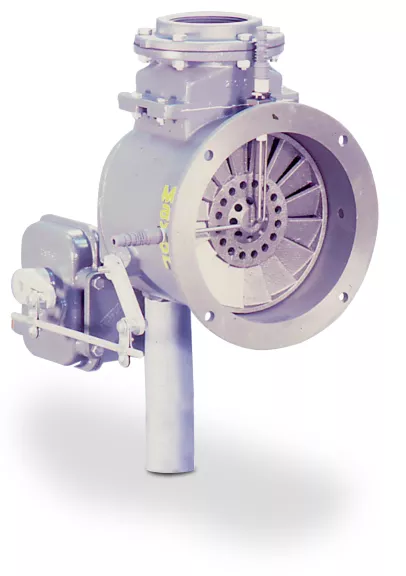
Raw Gas Line Burners
- Mount directly in the ductwork or at the dryer inlet
- Use the system’s existing process fan as combustion air — no separate blower required
- Cost-effective and space-efficient
- Compatible with both direct and indirect fire configurations
- The most common choice across food, chemical, and industrial spray dryer applications
A critical installation factor: profiling. The opening around the burner in the ductwork or at the dryer inlet controls how fast air moves across the burner face. Air velocity determines how much combustion air the burner receives, which determines its capacity and its ability to turn down. If the opening is too large, air velocity drops and unburned gas accumulates in the system. If the opening is too small, the velocity blows past the burner and extinguishes the flame at low fire. Profiling this correctly is a step that gets skipped when general contractors or HVAC technicians install burners on spray dryers, and it is one of the more common problems BDC encounters on first service visits.
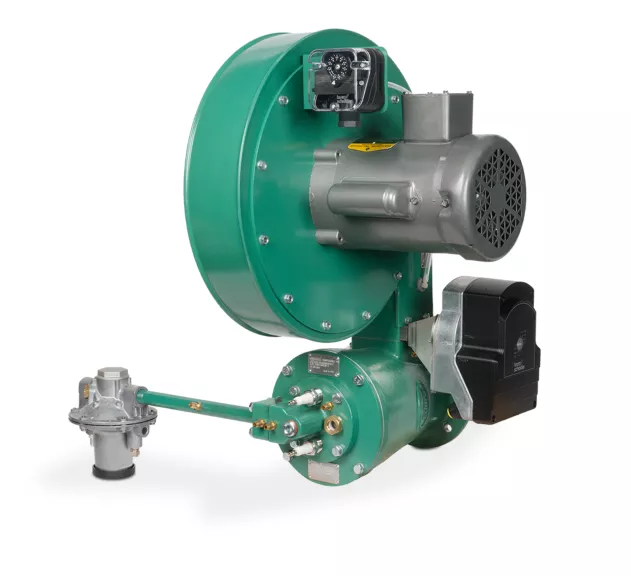
Gun Style Burners
- Fire into a separate combustion chamber or heat exchanger
- Used primarily in indirect fire configurations
- Better suited for operations where emission requirements call for more controlled combustion
- Common in food and pharmaceutical applications
Low-Emission Line Burners
- Designed for direct fire operations that need to reduce NOx output
- Fewer options available in this category than in standard line burners
- Worth evaluating when state emission regulations or product discoloration concerns apply
Why Spray Dryer Service Requires Industrial Combustion Expertise
Spray dryers are industrial combustion systems. They are often maintained by HVAC service companies because those companies already handle other equipment in the facility and consolidating service providers seems practical.
The problem is that HVAC technicians are trained to produce a temperature. They are not necessarily trained to understand everything that happens inside a spray dryer. They can confirm the burner is firing. What they often cannot do is evaluate air velocity profiling, diagnose uneven heat distribution, assess flame length relative to product contact risk, or identify a combustion imbalance generating excess NOx. When something goes wrong and the cause is not obvious, the default response is often to declare the burner the problem. Having an experienced team that knows burners means the root cause gets found, not just the nearest part to replace.
Need Help with Your Spray Dryer?
BDC services spray dryer combustion systems across all three industries covered in this guide, throughout the Midwest with growing coverage in Nebraska, Iowa, Colorado, and Utah. Services include burner tuning and inspection, NFPA compliance, emissions optimization, and Master Service Agreements for multi-plant operations.
If your spray dryer is producing inconsistent product, running into compliance questions, or simply has not had a thorough combustion inspection, request a burner consultation today.